
When to See a Doctor for Shoulder Pain in Beaumont, TX


Understanding Your Shoulder Joint and Why It Hurts
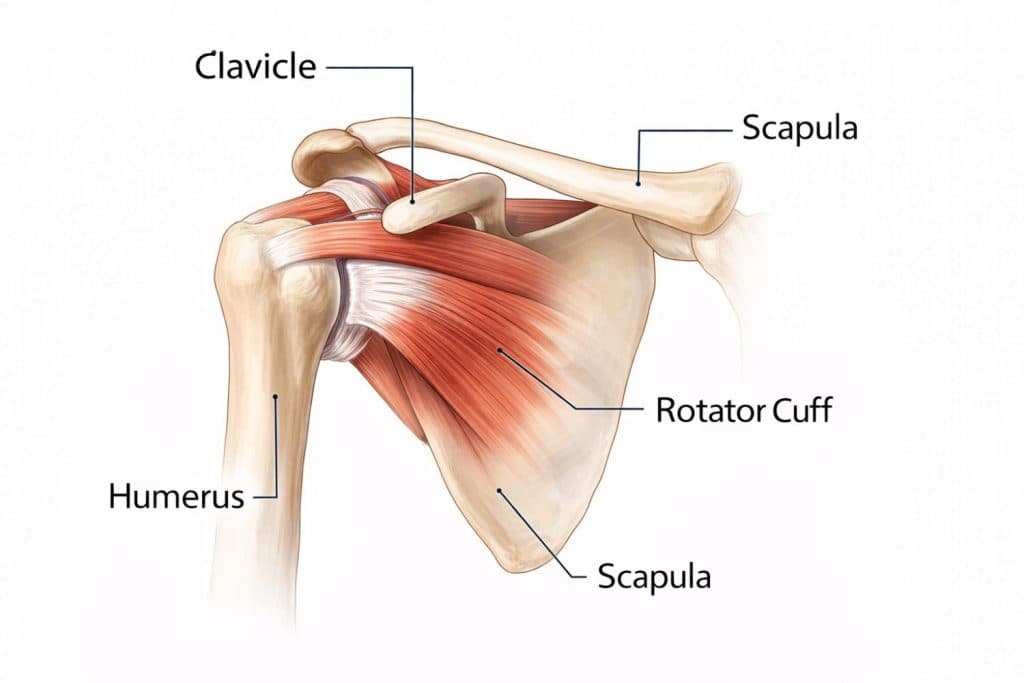
Basic Shoulder Anatomy in Simple Terms
Common Causes of Shoulder Pain (Beyond Car Accidents)
- Overuse and Repetitive Motion: Jobs that require overhead work (like painting or construction) or sports like tennis and baseball often lead to strain.
- Poor Posture: Slouching at a desk can cause muscle imbalances that pull on the shoulder joint.
- Age-Related Degeneration: As we age, the cushioning in the joint wears down, leading to osteoarthritis.
- Tendinitis and Bursitis: Inflammation of the tendons or the fluid-filled sacs (bursae) that cushion the joint.
- Rotator Cuff Tears: Partial or full tears can happen from a single heavy lift or gradual fraying over time.
Normal Soreness vs. Concerning Shoulder Pain
When Mild Shoulder Soreness Is Usually Okay
- You recently tried a new workout or lifted something heavy, resulting in muscle fatigue.
- The soreness is mild to moderate and does not limit your ability to move your arm.
- The discomfort improves noticeably after a few days of rest, icing, and gentle stretching.
Signs Your Shoulder Pain May Be More Serious
- Pain that is sharp, shooting, or severe enough to wake you up at night.
- Discomfort that persists despite rest or is getting worse over time.
- Stiffness that physically prevents you from raising your arm or reaching behind your back.
Specific Symptoms That Mean You Should See a Doctor
Sudden, Severe, or Traumatic Shoulder Pain
Shoulder Pain That Lasts More Than a Few Days
Pain That Limits Your Movement or Strength
- You cannot lift your arm above your head to comb your hair or reach a high shelf.
- You have difficulty reaching behind your back (like tucking in a shirt).
- Your arm feels weak, or you feel like the shoulder might “give out” or slide out of the socket.
Night Pain or Pain That Disrupts Sleep
Swelling, Warmth, or Visible Changes
Numbness, Tingling, or Pain That Travels Down the Arm
Common Shoulder Conditions a Doctor Can Diagnose
Examples of Shoulder Problems Your Doctor May Consider
- Rotator Cuff Injuries: Strains or tears in the muscles stabilizing the joint.
- Impingement: When shoulder tendons rub against the shoulder blade.
- Arthritis: Wear and tear of the joint cartilage.
- Frozen Shoulder (Adhesive Capsulitis): A condition where the connective tissue thickens and tightens around the joint.
What Kind of Doctor to See for Shoulder Pain in Beaumont, TX
What to Expect at a Shoulder Pain Medical Evaluation

History, Questions, and Physical Exam
When Imaging or Additional Tests May Be Recommended
Next Steps and Treatment Plan (High-Level Only)
When Shoulder Pain Is an Emergency
Red-Flag Symptoms Requiring Immediate or Emergency Care
- Your shoulder pain is accompanied by chest pressure, shortness of breath, or nausea (this can sometimes be a sign of a heart attack).
- You have a sudden, severe injury with obvious deformity, or the bone is breaking the skin.
- You have severe pain accompanied by a high fever or chills.
Living in Beaumont, TX: Don’t Ignore Ongoing Shoulder Pain
How Untreated Shoulder Pain Can Affect Daily Life
Getting the Right Shoulder Pain Doctor in Beaumont
Conclusion

Frequently Asked Questions About Car Accident Care in Beaumont
When should I be worried about shoulder pain?
You should be concerned if your shoulder pain is accompanied by a significant loss of function, such as an inability to lift your arm or carry light objects. While mild soreness from a weekend at the Beaumont Athletic Complex is normal, pain that is sharp, persistent, or wakes you from sleep indicates a deeper issue. “Red flag” symptoms like a visible deformity, a “popping” sensation during an injury, or pain that radiates toward your neck or down your arm should prompt an immediate medical evaluation to rule out fractures or severe tears.
How do I know if my shoulder pain is serious?
Shoulder pain is generally considered serious if it is “unremitting”—meaning it does not improve with rest, ice, or over-the-counter anti-inflammatories after 72 hours. Serious indicators include intense swelling, localized heat, or weakness that makes the arm feel “dead.” If the pain started after a high-impact event, like a car accident on the Eastex Freeway, or if you can see a physical change in the joint’s shape, you likely have a structural injury (like a dislocation or full-thickness rotator cuff tear) that requires professional imaging and a doctor’s diagnosis.
What are the red flags for shoulder pain?
Medical red flags include sudden, crushing pain; a visible lump or deformity; and systemic symptoms like fever or chills, which may indicate an infection in the joint. Neurological red flags involve numbness, tingling, or a “pins and needles” sensation in the hand or fingers, suggesting nerve compression. Additionally, if shoulder pain is accompanied by chest tightness or shortness of breath, it is a medical emergency. For Beaumont residents, identifying these signs early is crucial to prevent permanent nerve damage or chronic loss of mobility in the shoulder joint.
How long is too long to wait for shoulder pain?
If you have been treating your shoulder at home with the “RICE” method (Rest, Ice, Compression, Elevation) for more than two weeks without noticeable improvement, you have waited too long. Many residents in Southeast Texas try to “power through” the pain, but delay can lead to a “frozen shoulder” (adhesive capsulitis), where the joint capsule thickens and severely restricts movement. Seeking a consultation within the first 7 to 14 days allows a doctor to intervene before inflammation turns into long-term scarring or a chronic degenerative condition.
Can a primary care doctor help with shoulder pain?
Yes, a primary care MD is often the best first step. They provide a comprehensive evaluation, rule out non-musculoskeletal causes (like referred pain from the gallbladder or heart), and can prescribe initial anti-inflammatory treatments. In Beaumont, a medical doctor can also coordinate your care by ordering diagnostic imaging—such as X-rays or MRIs—and referring you to a specialist, chiropractor, or physical therapist if needed. Starting with an MD ensures you have a medically sound diagnosis before beginning any specialized or invasive treatment programs.
Is it better to see a doctor or a chiropractor for shoulder pain?
The answer depends on the source of the pain. If the injury involves a suspected fracture, infection, or severe tendon tear, you should see a Medical Doctor (MD) first for stabilization and diagnosis. However, if the shoulder pain stems from poor posture, repetitive strain, or misalignment of the neck and upper back, a chiropractor is highly effective for restoring joint mechanics. Many successful recovery plans in Beaumont involve a “co-managed” approach where an MD handles the medical diagnosis and a chiropractor focuses on functional movement and alignment.
How can I tell if my rotator cuff is torn?
A hallmark sign of a rotator cuff tear is weakness when trying to lift the arm out to the side or rotate it outward. You might experience a “catching” sensation or a dull ache deep in the shoulder that becomes sharp when reaching for high shelves. Night pain is also incredibly common with tears, making it impossible to sleep on the affected side. While a doctor uses specific orthopedic tests like the “Empty Can Test” to check for tears, a definitive diagnosis usually requires an MRI to see the soft tissue.
Why does my shoulder hurt more at night?
Night pain is often due to the way gravity affects the shoulder joint when you lie down. When horizontal, the space between the shoulder bones can narrow, compressing inflamed tendons or the bursa—a condition known as impingement. Furthermore, during the day, your muscles stay active and help “set” the joint, but at rest, the protective tension is lost, allowing the ball of the joint to put pressure on injured tissues. Persistent night pain is one of the most common reasons patients in Beaumont seek a medical consultation.
When should I go to the ER for shoulder pain?
You should visit an emergency room in Beaumont if the pain is the result of a high-energy trauma with an obvious bone deformity or if you cannot move your arm at all. Other reasons for ER-level care include severe bleeding, an open fracture, or if the shoulder pain is accompanied by a high fever and extreme redness (potential septic arthritis). If the pain is chronic or developed slowly over time, an urgent care or a scheduled MD consultation is usually more appropriate than an emergency room visit.
Can shoulder pain be a sign of a heart attack?
Yes, referred pain in the left shoulder is a well-known symptom of a heart attack, particularly in women. This occurs because the nerves from the heart and the nerves from the shoulder travel the same pathways to the brain. If your shoulder pain is sudden and “heavy,” and is paired with chest pressure, pain in the jaw, nausea, or cold sweats, do not look for a shoulder doctor—call 911 immediately. In Beaumont, emergency services are trained to distinguish between a musculoskeletal injury and a cardiac event.
Deepak Sharma, DC is a licensed Doctor of Chiropractic and the owner of Car Accident Cares in Beaumont, TX. He reviews the clinical content published across the site and works with a multidisciplinary network of MDs, chiropractors, imaging centers, and pain-management specialists focused on accurate diagnosis, evidence-based treatment, and complete recovery for motor-vehicle-accident victims across Beaumont and Houston.