
Best Affordable MRI in Beaumont
An MRI (magnetic resonance imaging) is a radiation-free scan that uses a strong magnet and radio waves to produce detailed pictures of soft tissue — muscles, ligaments, discs, nerves, and the spinal cord — which is exactly what often gets injured in a car accident but does not show up on an X-ray. After a Beaumont crash, an MRI is often recommended when pain, numbness, weakness, or headaches persist beyond the first days, because it can confirm the source of your symptoms and document the injury for both your treatment and any insurance or attorney claim.
Medically reviewed by Deepak Sharma, DC · Last reviewed · Updated
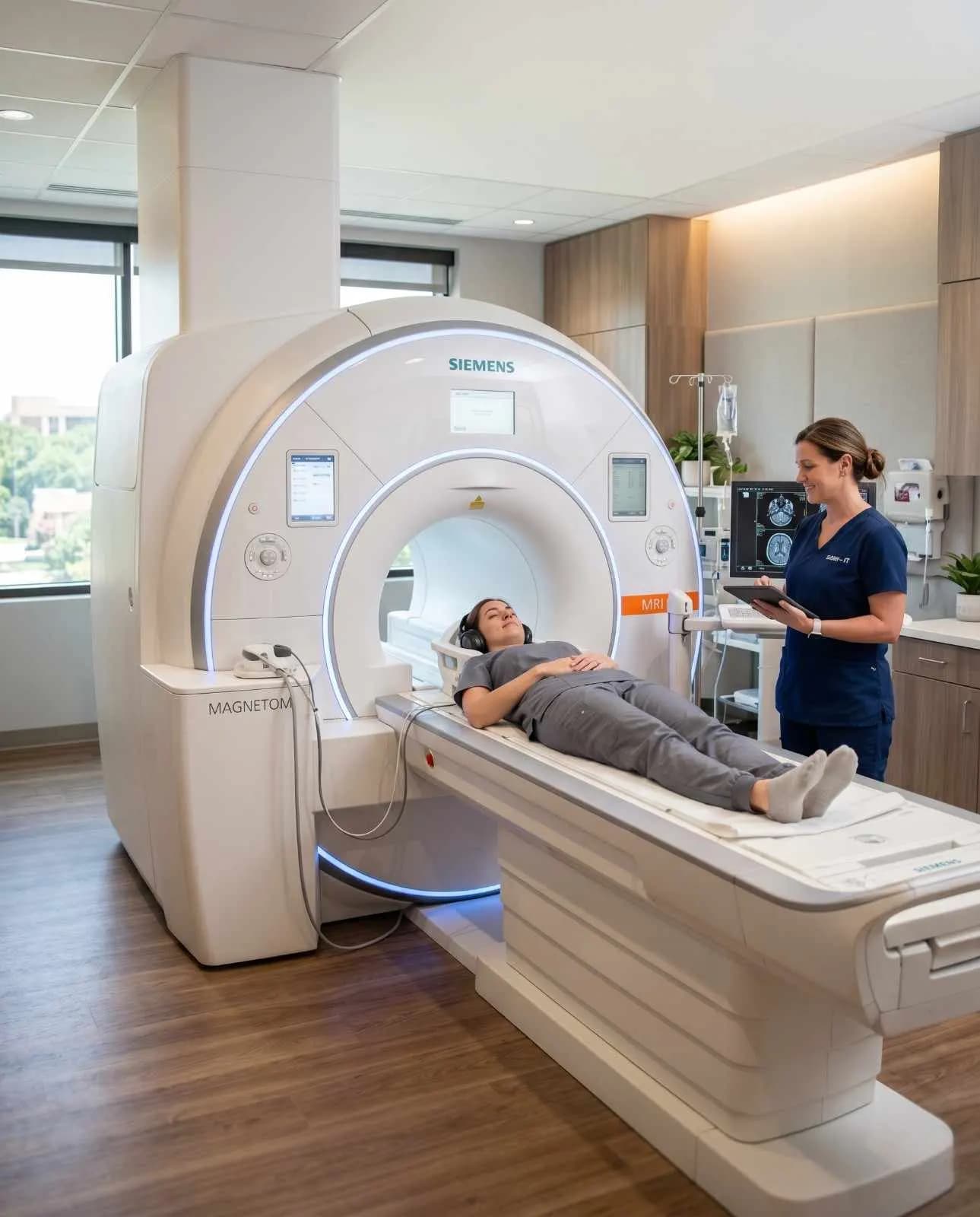
Quick answer · Key facts
- MRI uses magnets and radio waves — no ionizing radiation, unlike X-rays or CT.
- It is the imaging of choice for soft-tissue injuries: herniated discs, ligament tears, nerve compression, and spinal cord injury.
- Same-day and next-day scans are typically available for accident patients in Beaumont.
- A typical scan takes about 20–60 minutes depending on the body area studied.
- We offer lien-friendly billing, so you can be scanned now and resolve payment through your settlement.
- Medically reviewed by Deepak Sharma, DC.
What is an MRI and how does it help after a car accident?
Magnetic resonance imaging creates cross-sectional images of the body without any radiation. Where an X-ray is excellent for bone, an MRI excels at the soft structures a crash tends to damage: the intervertebral discs in your spine, the ligaments that stabilize your neck and joints, peripheral nerves, and the spinal cord itself.
After the adrenaline of an accident fades, these soft-tissue injuries are often what is left behind — and they can worsen if they go undiagnosed.
An MRI sees what an X-ray can't — the soft tissue where most accident injuries actually live.
For accident patients, an MRI does two jobs at once. Clinically, it lets your physician see the precise injury so treatment is targeted rather than guesswork.
For documentation, it produces an objective, dated record that connects your symptoms to the collision — information your provider, insurer, and attorney all rely on.
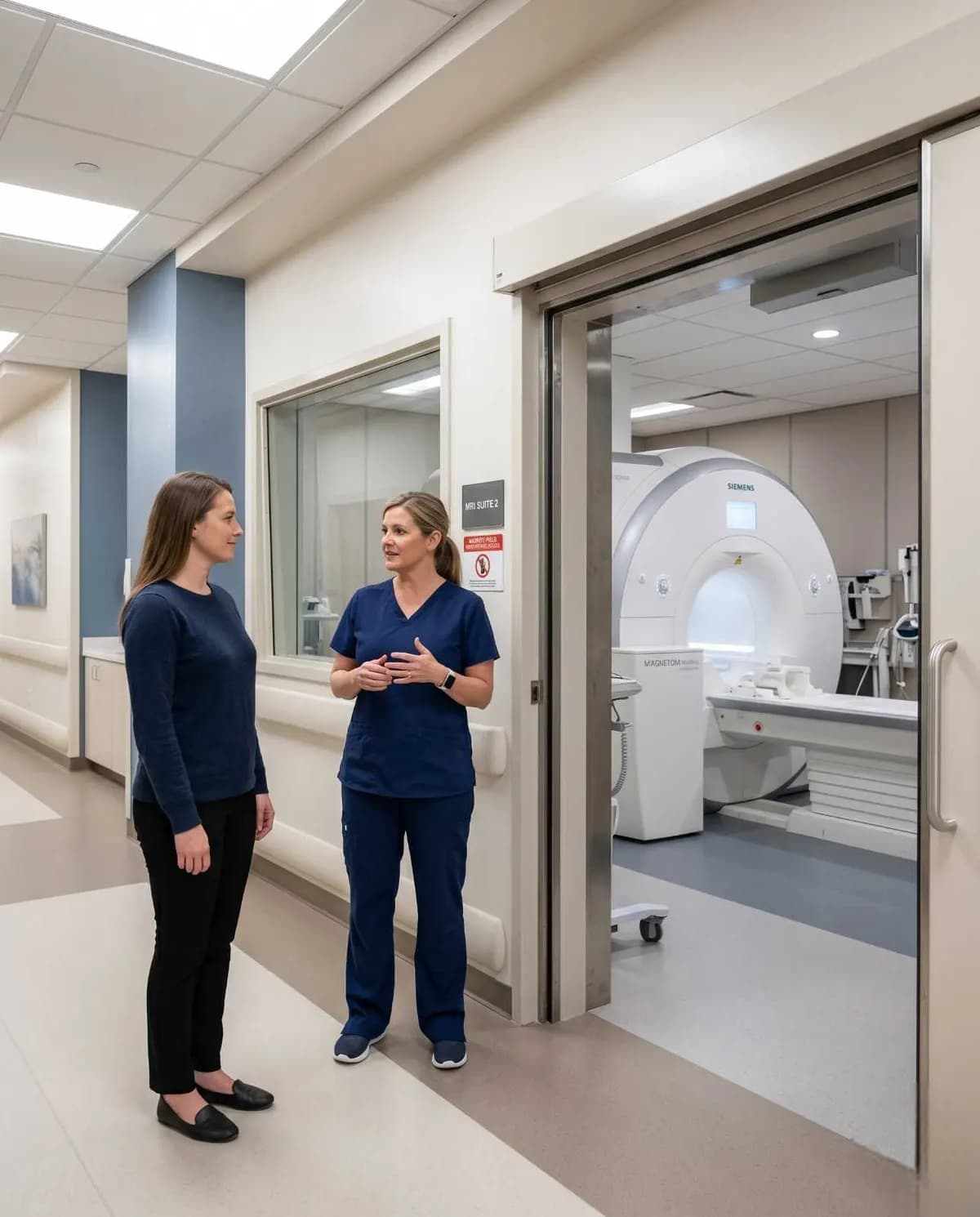
When should you get an MRI after a crash in Beaumont?
Not every accident requires an MRI, and your provider will decide based on your symptoms and exam. In general, imaging is considered when symptoms that persist or worsen — or appear days after the crash — point to a soft-tissue injury.
These injuries frequently feel mild at first and then escalate, which is why ongoing symptoms should always be evaluated rather than waited out.
- Neck or back pain that does not improve, or gets worse, after the first few days
- Numbness, tingling, or weakness in an arm, hand, leg, or foot
- Radiating pain that travels down a limb (a possible sign of nerve or disc involvement)
- Persistent or worsening headaches, dizziness, or memory and concentration problems
- Reduced range of motion in a joint, or instability that suggests a ligament tear
- Any loss of bowel or bladder control — seek emergency care immediately
If you notice any of these warning signs, contact a physician promptly. Early evaluation protects your recovery and ensures your injuries are documented while the link to the accident is clear.
What injuries can an MRI detect that X-rays miss?
Herniated and bulging discs
Disc material pressing on nerves, a common whiplash consequence.
Ligament and tendon tears
In the neck, shoulder, knee, or back.
Soft-tissue and muscle injury
Strains, sprains, and deep bruising not visible on X-ray.
Nerve compression
The source of radiating pain, numbness, and weakness.
Spinal cord injury
Swelling or compression that needs urgent attention.
Occult (hidden) injuries
Early changes that may not yet show on other imaging.
What to expect during your MRI
An MRI is painless and non-invasive. The most important things to know are that the machine is loud and that you will need to hold still so the images stay sharp. Here is the typical sequence:
- 1
Check-in & screening
You complete a safety questionnaire about metal implants, pacemakers, or prior surgeries, since the scanner uses a powerful magnet. - 2
Preparation
You remove metal objects and may change into a gown. In some cases a contrast dye is given by IV to highlight specific tissues. - 3
Positioning
You lie on a padded table that slides into the scanner. You are given earplugs or headphones for the noise and a call button to reach the technologist. - 4
The scan
The machine captures images in several sequences. Most studies take 20–60 minutes; staying still during each sequence is key. - 5
Review & results
A radiologist interprets the images and your physician discusses the findings and next steps in your treatment plan.
MRI cost, insurance & attorney liens in Beaumont
The cost of an MRI depends on the body area scanned and whether contrast is used, and your coverage depends on your specific plan. We work to keep diagnostic imaging accessible for accident patients in Beaumont, and we coordinate directly with insurers and with personal-injury attorneys.
If you do not have health insurance or are waiting on a settlement, ask about our lien-friendly arrangements: you can be scanned and treated now, with payment deferred and resolved through your accident claim. We will explain your options clearly before any imaging is performed, so there are no surprises.
Why timing matters after an accident
Two clocks start the moment a crash happens — one medical, one legal. Medically, soft-tissue injuries treated early tend to be more manageable than those left to compensate and stiffen over weeks. Legally and for insurance, a documented gap between the accident and your first imaging can be used to question whether the crash caused your injury at all.
Getting evaluated promptly addresses both. An MRI performed soon after symptoms appear gives your care team an accurate baseline and ties your injury to the accident with a clear, dated record.
Why choose Car Accident Cares for your MRI
From scheduling to results, our imaging is built around accident recovery — fast, accurate, and coordinated with your legal claim.
Fast access when it matters
Accident-focused expertise
Lien-friendly billing
Documentation that holds up
Coordinated, multidisciplinary care
Physician-led and reviewed
Hear From Our Satisfied Clients
“I had no idea how I'd pay for imaging after my crash. They set up a lien through my attorney so I could get the MRI right away and focus on healing instead of bills.”
“I kept being told my X-rays were fine, but my arm was going numb. The MRI here finally found a herniated disc pressing on a nerve — and they had me scanned the same week I called.”
Other ways we help recovery
Chiropractor Care in Beaumont
Spinal alignment, soft-tissue manipulation, and adjustment therapies to relieve back and neck pain after a collision.
Learn moreMD Consultation in Beaumont
Initial medical evaluation by a licensed primary-care MD to document injuries and coordinate downstream care.
Learn morePain Management Consultants in Beaumont
Non-surgical interventional pain specialists — trigger-point, epidural, facet joint, and medication management.
Learn moreOrthopedic and Spine Surgeon Consultation
Board-certified ortho and spine surgeons for fracture, ligament, and disc injuries that need a higher level of care.
Learn moreCommon injuries we treat
Whiplash & Neck Pain Treatment
The #1 injury seen after rear-end collisions — even at low speeds.
See protocolHerniated Disc Doctor
Sciatica, radiating pain, and weakness from disc injuries.
See protocolLower Back & Knee Pain Treatment
Lumbar strain, ligament damage, and post-collision joint pain.
See protocolShoulder Injuries
Rotator cuff, labral tears, and seatbelt-related shoulder trauma.
See protocolFrequently Asked Questions About Best Affordable Beaumont MRI Diagnostic Imaging Service
Don't see your question? Call us at (409) 834-4100 — we answer 24/7.
Do I need an MRI after a minor car accident?
Not always. Whether you need an MRI depends on your symptoms and a clinical exam, not on how the car looks. Because soft-tissue injuries can feel minor at first and worsen over days, your provider may recommend an MRI if pain, numbness, weakness, or headaches persist or increase after a crash.Is an MRI safe? Does it use radiation?
An MRI uses a strong magnet and radio waves, not ionizing radiation, so there is no radiation exposure. It is considered very safe for most people. Because of the magnet, you must inform the team about any metal implants, a pacemaker, or other devices during safety screening.What is the difference between an MRI, a CT scan, and an X-ray?
An X-ray is fast and best for bone. A CT scan uses X-rays to build detailed cross-sections and is excellent for fractures and acute internal injury. An MRI uses magnets instead of radiation and shows soft tissue — discs, ligaments, nerves, and the spinal cord — in the greatest detail. Your provider chooses based on your symptoms.How long does an MRI take?
Most MRI studies take about 20 to 60 minutes, depending on the body area being examined and whether contrast is used. Staying still during each imaging sequence helps keep the pictures sharp.What injuries can an MRI find that an X-ray cannot?
An MRI can detect herniated or bulging discs, ligament and tendon tears, muscle and soft-tissue injury, nerve compression, and spinal cord injury — damage that typically does not appear on an X-ray, which mainly shows bone.How soon after my accident should I get an MRI?
If you have persistent or worsening symptoms, it is best to be evaluated promptly. Early imaging gives your care team an accurate baseline and clearly documents the connection between your injury and the accident, which matters for both recovery and any claim.Will my insurance or an attorney lien cover the MRI?
Coverage depends on your specific plan, and costs vary by the area scanned. We coordinate with insurers and with personal-injury attorneys, and we offer lien-friendly arrangements so you can be scanned now and resolve payment through your settlement. We will explain your options before any imaging is done.Does an MRI hurt or require anything to be inserted?
The scan itself is painless and non-invasive. The machine is loud, so you are given earplugs or headphones. In some cases a contrast dye is given through an IV to highlight specific tissues; your team will tell you in advance if that applies to you.Can I get an MRI if I am claustrophobic?
Many people who feel anxious in enclosed spaces complete an MRI comfortably with support from the technologist, and a call button is always within reach. Tell your provider beforehand — options such as an open-style scanner or arrangements for relaxation can often be discussed.Who reviews my MRI results?
A radiologist interprets the images, and your treating physician reviews the findings with you and explains the next steps. All clinical imaging guidance at Car Accident Cares is overseen by our owner, Deepak Sharma, DC.
Deepak Sharma, DC is a licensed Doctor of Chiropractic and the owner of Car Accident Cares in Beaumont, TX. He reviews the clinical content published across the site and works with a multidisciplinary network of MDs, chiropractors, imaging centers, and pain-management specialists focused on accurate diagnosis, evidence-based treatment, and complete recovery for motor-vehicle-accident victims across Beaumont and Houston.
Explore Blog

What to Expect from Your Whiplash Recovery Timeline Texas After a Car Accident
Most whiplash patients recover within 6 to 12 weeks with appropriate care — but that window is not guaranteed, and for Beaumont drivers dealing with delayed sy…

Can a Car Accident Aggravate a Pre-Existing Condition in Texas?
If you have been involved in a motor vehicle collision in Southeast Texas, you likely have countless questions running through your mind. Assessing vehicle dam…
Understanding Different Types of Car Accident Impacts and Injuries
Driving through busy Beaumont TX—especially near intersections on Dowlen Road, along Interstate 10, or through the heavy traffic on College Street—means dealin…
Find Auto Injury Specialist Near You
Same-week appointments. Lien-friendly billing. Over 100 clinic locations across Beaumont and Houston.