When Is an X-Ray the Right Imaging Choice?
DS
By Deepak Sharma, DC
Medically reviewed
Owner & Doctor of Chiropractic · 4 min read · Published · Updated · Last reviewed
Introduction
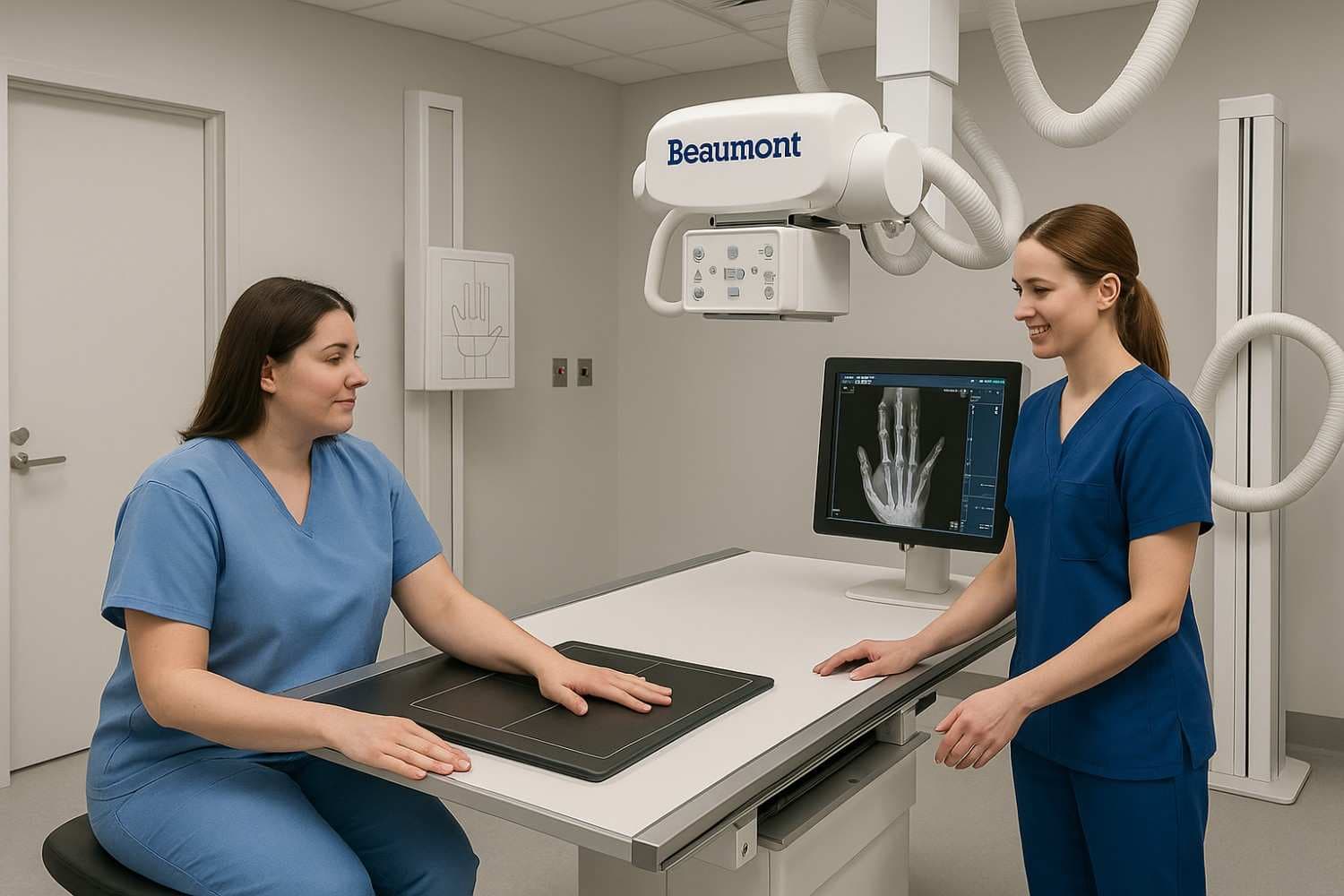
After a fall, twist, or motor vehicle collision in Beaumont, TX, prompt assessment of injuries is essential. Although advanced modalities like CT and MRI provide detailed insights, X-rays remain the first-line imaging choice for many trauma scenarios due to their speed, accessibility, and ability to visualize bone structures. If you’re asking, “When should I get an X-ray Beaumont TX?”, this guide explains what X-rays reveal, when they’re most effective, and why digital X-rays at local facilities offer superior care.
What Is an X-Ray and How Does It Work?
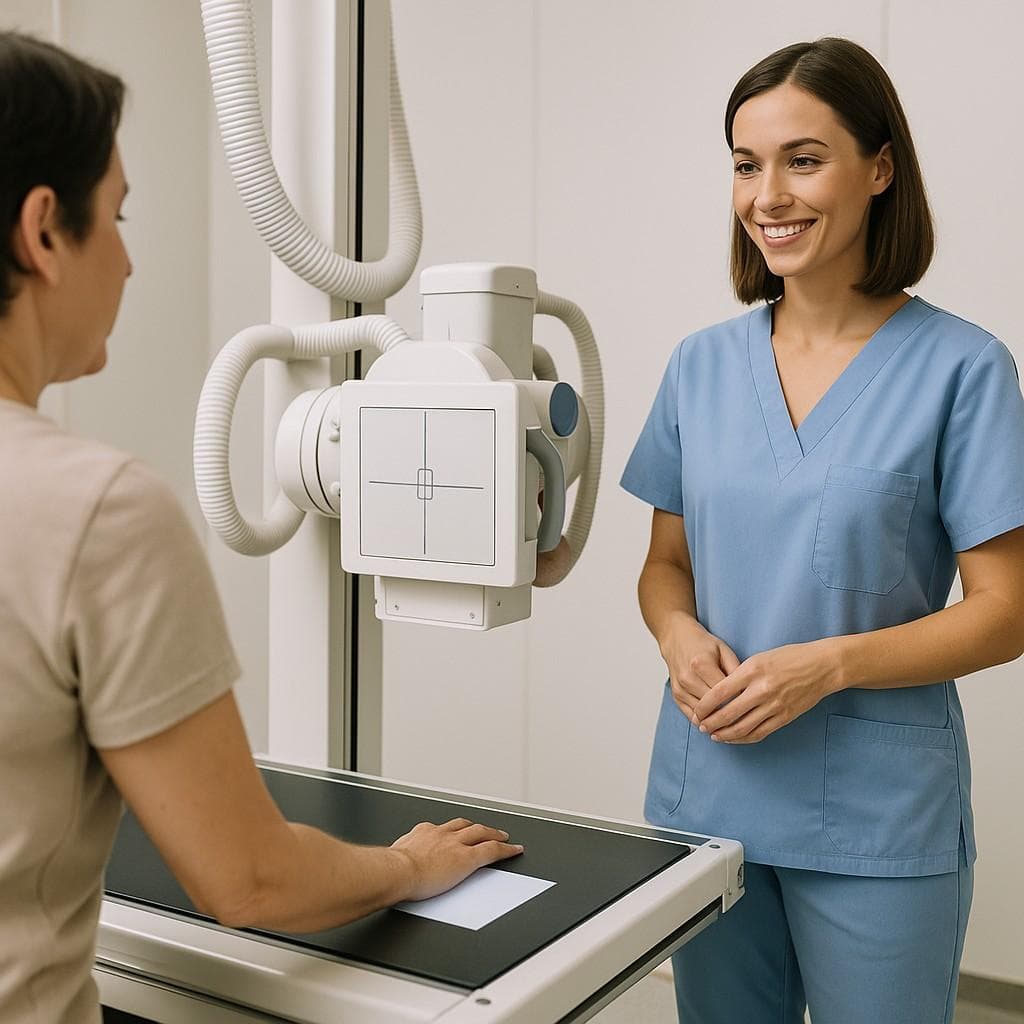
An X-ray uses a small dose of ionizing radiation to produce two-dimensional images of internal structures. As X-rays pass through the body:
- Dense tissues (bone) absorb more, appearing white.
- Soft tissues (muscle, fat, organs) appear in shades of gray.
- Air-filled spaces (lungs) appear black.
This non-invasive, rapid technique typically takes minutes from positioning to image review, enabling immediate clinical decisions.
When X-Rays Are the First Choice
While advanced imaging like MRI and CT scans have their place, X-rays remain the preferred initial diagnostic tool for specific injuries, especially those involving the skeletal system.
1. Bone Fractures and Breaks
X-rays are the gold standard for detecting skeletal injuries:
– Hairline and stress fractures (some subtle fractures may require follow-up imaging)
– Complete and comminuted (multi-fragment) breaks
– Growth plate injuries in children
– Displaced fractures requiring realignment
– Hairline and stress fractures (some subtle fractures may require follow-up imaging)
– Complete and comminuted (multi-fragment) breaks
– Growth plate injuries in children
– Displaced fractures requiring realignment
Immediate X-ray diagnosis guides fracture management—casting, splinting, or surgical referral.
2. Joint Dislocations and Arthropathies
Rapid X-ray assessment confirms:
– Joint dislocations (shoulders, hips, knees) needing urgent reduction
– Arthritis changes (joint space narrowing, osteophyte formation)
– Bone abnormalities like spurs or cysts
– Joint dislocations (shoulders, hips, knees) needing urgent reduction
– Arthritis changes (joint space narrowing, osteophyte formation)
– Bone abnormalities like spurs or cysts
In emergency settings, X-rays ensure correct joint alignment before advanced imaging.
3. Foreign Body Detection
Radiopaque objects (glass, metal fragments) embedded in soft tissues are readily identified on X-ray, guiding removal without delay.
Signs You Need an X-Ray
Seek an X-ray in Beaumont if you experience:
– Severe, focal pain aggravated by movement
– Visible deformity of a limb or joint
– Inability to bear weight or move a joint
– Rapid, unexplained swelling or bruising
– Numbness or tingling suggesting nerve compromise
– Severe, focal pain aggravated by movement
– Visible deformity of a limb or joint
– Inability to bear weight or move a joint
– Rapid, unexplained swelling or bruising
– Numbness or tingling suggesting nerve compromise
Early X-ray evaluation supports timely referral to an auto injuries specialist for comprehensive care.
Advantages of Digital X-Rays in Beaumont
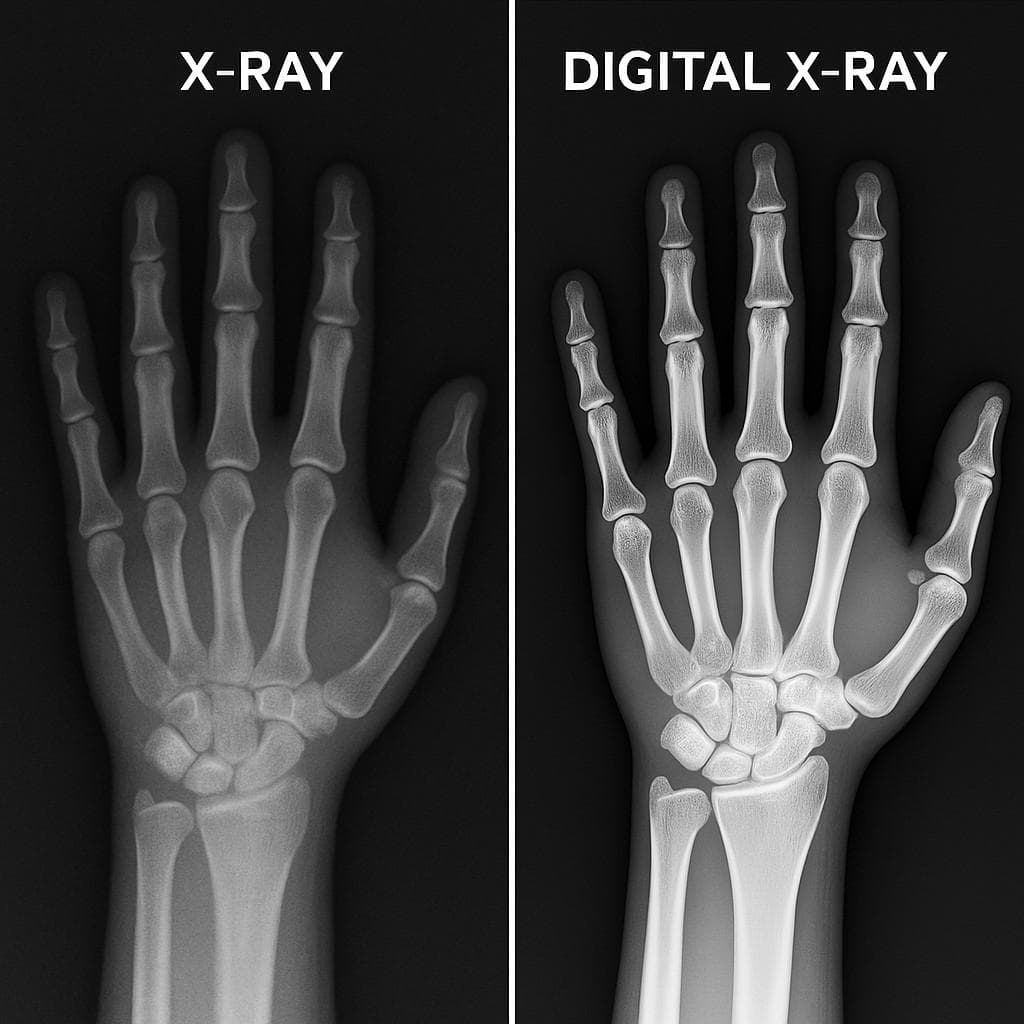
Modern digital radiography outperforms traditional film in patient safety and efficiency:
– Immediate image availability reduces repeat exposures and speeds diagnosis.
– Enhanced image quality detects subtle fractures with higher resolution.
– Lower radiation doses (up to 90% less than film systems).
– Post-capture brightness/contrast adjustments eliminate retakes.
– Electronic storage and sharing streamline referrals and second opinions.
– Immediate image availability reduces repeat exposures and speeds diagnosis.
– Enhanced image quality detects subtle fractures with higher resolution.
– Lower radiation doses (up to 90% less than film systems).
– Post-capture brightness/contrast adjustments eliminate retakes.
– Electronic storage and sharing streamline referrals and second opinions.
These benefits make digital X-rays the standard in local imaging centers.

Speed and Accessibility: Why X-Rays Excel
Emergency departments report that about 35% of ED visits include an X-ray, a rate that has remained steady from 2001 to 2010 despite rising CT use. Unlike CT (minutes to scan and reconstruct) or MRI (30–60 minutes), X-rays take seconds to acquire and minutes to interpret, making them ideal for urgent evaluation in Beaumont’s hospitals and urgent care clinics.
When Other Imaging Is Required
While X-rays excel in bone imaging, they have limitations:
– Soft tissue injuries (ligament tears, muscle strains) often need MRI for detailed visualization.
– Complex fractures involving joint surfaces or spinal canal may require CT for three-dimensional assessment.
– Internal organ injuries (solid organ lacerations, vascular tears) are better evaluated by contrast-enhanced CT.
– Soft tissue injuries (ligament tears, muscle strains) often need MRI for detailed visualization.
– Complex fractures involving joint surfaces or spinal canal may require CT for three-dimensional assessment.
– Internal organ injuries (solid organ lacerations, vascular tears) are better evaluated by contrast-enhanced CT.
Clinicians typically order advanced studies after an initial X-ray rules out or confirms fractures.
Conclusion
For Beaumont residents, X-rays should be your first imaging choice when suspecting bone fractures, joint dislocations, or embedded foreign bodies—offering rapid, accurate, and low-dose diagnosis. Digital X-ray technology further enhances safety and diagnostic clarity, ensuring you receive prompt, effective care. If you need an X-ray Beaumont TX, our facility provides state-of-the-art digital radiography combined with compassionate expertise. Don’t delay—accurate diagnosis is the first step toward recovery.
Medically reviewed by
Verified
DS
Deepak Sharma
DC
Owner & Doctor of Chiropractic
Deepak Sharma, DC is a licensed Doctor of Chiropractic and the owner of Car Accident Cares in Beaumont, TX. He reviews the clinical content published across the site and works with a multidisciplinary network of MDs, chiropractors, imaging centers, and pain-management specialists focused on accurate diagnosis, evidence-based treatment, and complete recovery for motor-vehicle-accident victims across Beaumont and Houston.