What to Expect During a CT Scan: Your Beaumont, TX Guide
DS
By Deepak Sharma, DC
Medically reviewed
Owner & Doctor of Chiropractic · 9 min read · Published · Updated · Last reviewed

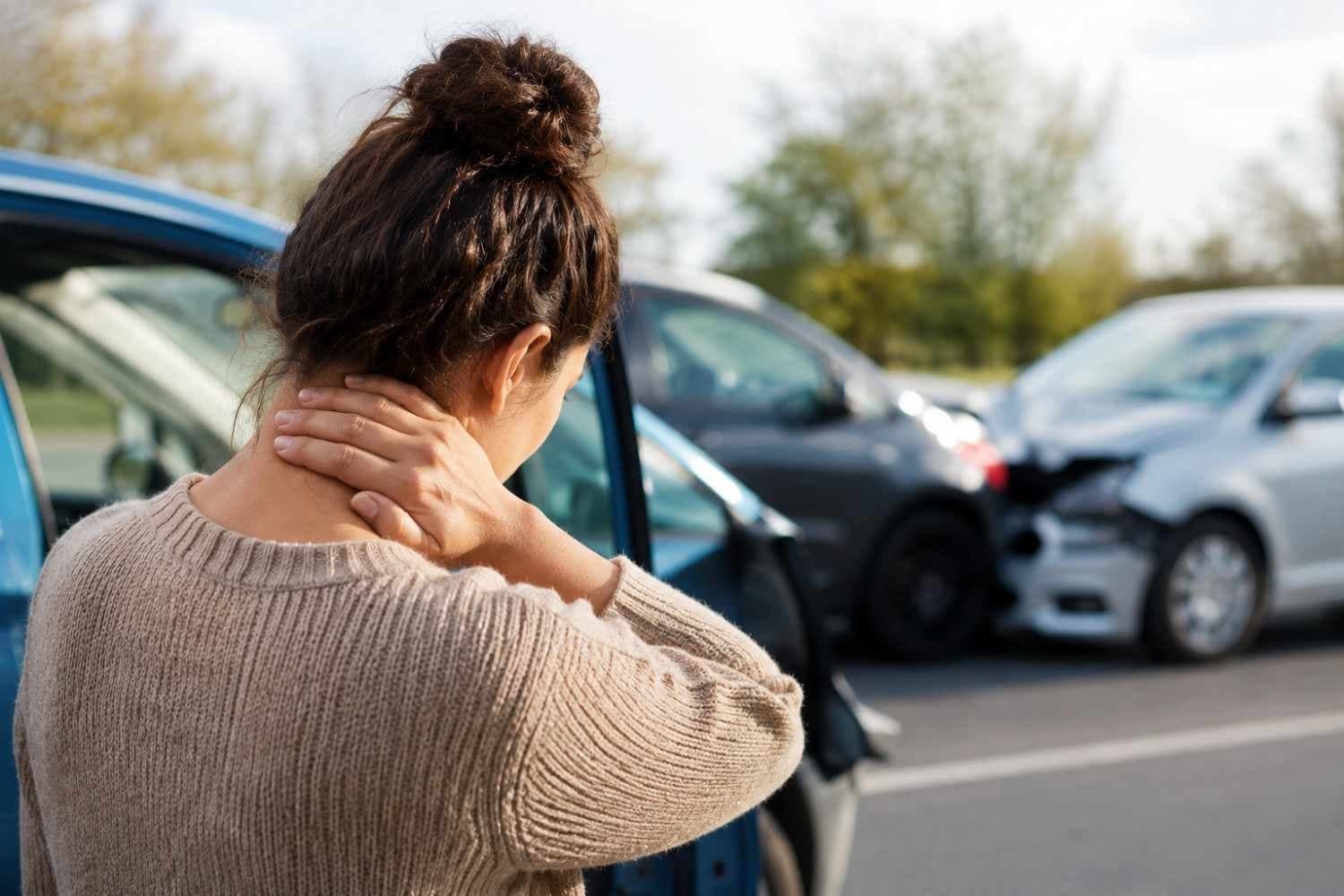
If you’ve been in an accident on I-10, the Eastex Freeway, or anywhere in Beaumont, your doctor may order a CT scan to check for internal injuries. Many of our patients at Car Accident Cares come in worried about the procedure—the noise, the machine, whether it will hurt. Here’s the truth: CT scans are quick (10-30 minutes), painless, and far less intimidating than you think.
This guide walks you through exactly what happens during a CT scan at our Beaumont facility, from the moment you check in to when you get your results. No medical jargon, no fluff—just the facts you need to feel prepared.
Before You Arrive: What You Need to Know
Do I need to fast? Does a CT scan get done on an empty stomach?
It depends on whether you’re getting contrast dye. If your scan uses IV contrast (a liquid that helps certain injuries show up better), you’ll need to avoid solid food for 4 hours before your appointment. Water is fine. If you’re getting a scan without contrast, eat normally.
Your doctor’s office will tell you which type you’re getting. If you accidentally eat before a contrast scan, call the imaging center—we can usually still proceed, but we need to know.
What should you not do before a CT scan?
Don’t wear jewelry or clothing with metal. Metal creates artifacts (white streaks) on the images that can hide injuries. Remove or avoid:
- Jewelry, piercings, watches
- Bras with underwire
- Clothing with zippers, buttons, or snaps
- Hairpins or metal hair accessories
Don’t skip your medications unless your doctor specifically told you to stop. Bring a list of what you’re taking.
Don’t forget to mention allergies or health conditions: Especially iodine/contrast allergies, kidney disease, diabetes, or pregnancy. These affect whether you can safely receive contrast dye.
What to bring to your appointment
- Insurance card and photo ID
- List of current medications
- Doctor’s referral or prescription (if required)
Arrive 10-15 minutes early for paperwork.
What Happens When You Arrive
01
Check-in and changing clothes
After checking in at the front desk, you’ll change into a hospital gown in a private room. Yes, you take your clothes off. This eliminates any hidden metal and gives the technologist clear access to position you correctly. You can usually keep your underwear on unless the scan requires imaging that specific area.
02
Medical history review
The CT technologist will ask about:
- Your injury (what happened in the accident)
- Allergies (especially to iodine or contrast dye)
- Kidney function and medications
- Pregnancy status (if applicable)
This is when they’ll place an IV in your arm if your scan requires contrast. The needle insertion feels like a normal blood draw and takes about 30 seconds.

During the Scan: What You'll Experience
01
What the machine looks like
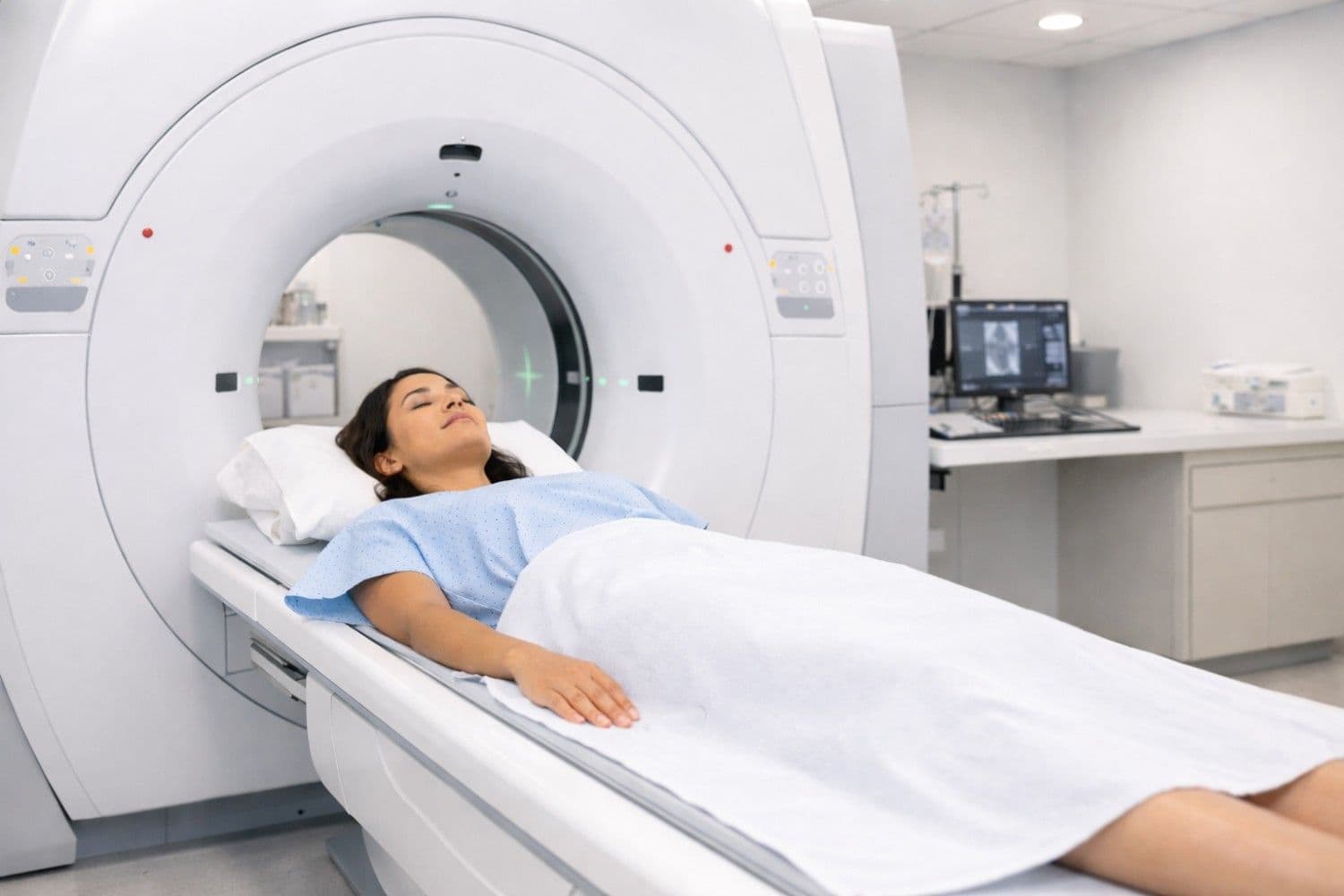
The CT scanner is a large “donut” with a wide opening. It’s open on both ends—not a closed tube like an MRI. Most people don’t feel claustrophobic. You lie on a padded table that slides through the opening.
02
The actual scanning process
Here’s what happens once you’re positioned:
- You lie still. The technologist positions you based on what body part needs scanning (head, chest, abdomen, knee, etc.). Small pillows or straps keep you comfortable and prevent movement.
- The table moves. It slides you slowly into the scanner opening. Only the part being scanned needs to go inside.
- You may hold your breath. For chest or abdominal scans, the technologist will ask you to hold your breath for 10-20 seconds at a time. They’ll give clear instructions through the intercom: “Breathe in… hold it… breathe normally.”
- The machine makes noise. You’ll hear whirring and humming sounds—about as loud as normal conversation (65-80 decibels). Much quieter than an MRI.
How long does a CT scan take? The scan itself takes 10-30 minutes depending on the body area. Head scans are fastest (about 10 minutes), while abdominal scans take 20-30 minutes.
If you're getting contrast dye
If your scan uses IV contrast, the technologist will inject it through the IV line during the scan. Here’s what you’ll feel:
- Warm sensation: You’ll feel warmth spreading through your body, especially in your chest. This is completely normal and fades in 30-60 seconds.
- Metallic taste: Some patients taste metal in their mouth briefly.
- Feeling like you need to urinate: This is a false sensation caused by the contrast—you’re not actually urinating. It passes quickly.
Serious reactions are rare (less than 0.1% of patients). The staff is trained to handle any issues immediately.
What is a CT scan for the knee?
Knee CT scans detect fractures that X-rays miss. After accidents, especially motorcycle crashes or side-impact collisions common on College Street, knee fractures can be complex and hard to see on standard X-rays. CT scans show 100% of tibial plateau fractures (the top of your shinbone), which are critical for treatment planning. You’ll lie on your back with your leg extended or positioned to isolate the injured knee.
After Your Scan: What Happens Next
01
Can you leave immediately?
Yes. Once the scan is complete, the IV comes out (if you had one), and you’re free to leave. No recovery time needed. You can drive, work, and resume all normal activities immediately.
02
What if I had contrast?
Drink plenty of water for the next 24 hours—at least 8-10 glasses. This helps your kidneys flush out the contrast material. You might notice slight tenderness where the IV was placed; this is normal and resolves in 1-2 days.
03
How soon do doctors receive CT scan results?
Routine scans: 24-48 hours. A radiologist reviews your images and writes a detailed report, which goes to your doctor. Your doctor will call you to discuss findings and next steps.
Emergency scans: 30 minutes to 1 hour. In urgent situations (suspected internal bleeding, severe trauma), results are available much faster.
Some facilities offer patient portals where you can view your report online once it’s finalized.
Common Concerns Answered
01
CT scan vs MRI: What's the difference?
CT scans are faster and better for bones and bleeding. MRI scans are better for soft tissue (ligaments, tendons, spinal cord) but take 30-60+ minutes and use a narrow tube that many find claustrophobic. For car accident injuries—fractures, internal bleeding, organ damage—CT is usually the first choice.
02
What can CT scans detect?
For Beaumont accident victims, CT scans identify:
- Internal bleeding
- Organ damage (liver, spleen, kidneys)
- Complex fractures (spine, pelvis, ribs, skull, knee)
- Brain injuries
- Ligament and tendon tears
Who is not allowed for CT scan?
Pregnant women should avoid CT scans due to radiation risk to the fetus. Alternative imaging (ultrasound, MRI) is used instead.
Patients with severe kidney disease (eGFR below 30) may not be able to receive contrast dye safely.
Patients with severe iodine allergies may need pre-medication or alternative imaging.
According to radiation safety standards The lifetime cancer risk from a single CT scan is approximately 1 in 1,000 (0.1%)—similar to other common health risks. For most patients, especially after accidents, the diagnostic benefit far outweighs this minimal risk.
What happens if you eat before a CT scan with contrast?
Usually nothing serious. The main risk is mild nausea, which occurs in less than 1% of patients. If you accidentally ate, tell the technologist—the scan can often still proceed safely. Recent research suggests fasting may not be necessary for all contrast scans, though facilities still recommend it as a precaution.
Side effects of CT scan
Most patients have zero side effects. With contrast, you may experience:
- Warm, flushed feeling during injection (very common, harmless)
- Brief metallic taste (common, temporary)
- Mild soreness at IV site for 1-2 days
Serious reactions (hives, difficulty breathing, severe nausea) are rare. Report any concerning symptoms immediately.
What to Expect: The Bottom Line
CT scans are one of the fastest, most painless diagnostic tools available. The entire appointment takes 30-45 minutes. The scan itself is just 10-30 minutes. You lie still, the table moves, and it’s over. No pain, no needles (except the IV if you need contrast), and you leave immediately after.
For Beaumont residents recovering from accidents on I-10, Highway 69, or local roads, accurate diagnosis through CT imaging is the critical first step toward effective treatment. The scan gives your doctor detailed images that reveal injuries X-rays miss—especially internal bleeding, complex fractures, and organ damage.
Ready to Schedule Your CT Scan in Beaumont?
If you’ve been in an accident and need diagnostic imaging, don’t let uncertainty delay your recovery. At Car Accident Cares, we specialize in fast, affordable CT scans for accident victims. Our team understands you’re stressed, in pain, and need answers quickly.
Call us today to:
- Schedule your appointment
- Ask questions about the procedure
- Discuss insurance coverage and payment options
- Learn about our comprehensive diagnostic imaging services for accident injuries
We’re here to help you get the accurate diagnosis you need for effective treatment and faster recovery. Contact Car Accident Cares in Beaumont today.

Medically reviewed by
Verified
DS
Deepak Sharma
DC
Owner & Doctor of Chiropractic
Deepak Sharma, DC is a licensed Doctor of Chiropractic and the owner of Car Accident Cares in Beaumont, TX. He reviews the clinical content published across the site and works with a multidisciplinary network of MDs, chiropractors, imaging centers, and pain-management specialists focused on accurate diagnosis, evidence-based treatment, and complete recovery for motor-vehicle-accident victims across Beaumont and Houston.