Understanding Whiplash Associated Disorders (WAD) in Beaumont, TX
DS
By Deepak Sharma, DC
Medically reviewed
Owner & Doctor of Chiropractic · 5 min read · Published · Updated · Last reviewed
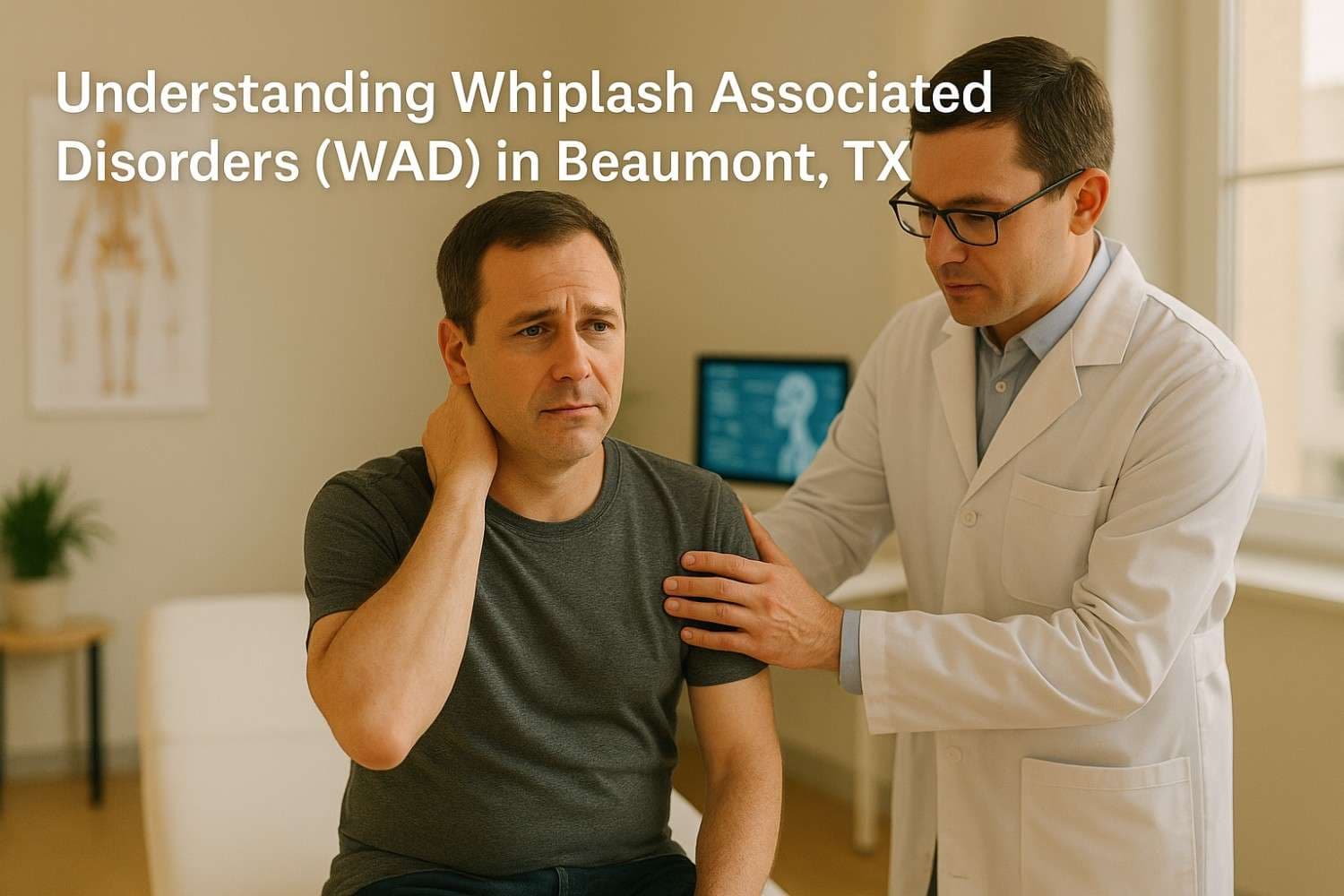
Car accidents—even low-speed collisions—can trigger Whiplash Associated Disorders Beaumont TX in up to 70% of rear-end crash victims nationwide. In Beaumont TX, persistent symptoms beyond simple neck pain often signal WAD. This guide explains what WAD entails, highlights common and overlooked symptoms, reviews diagnostic methods, and outlines effective management strategies using the latest chiropractic and multidisciplinary approaches.
What Is Whiplash Associated Disorder (WAD)?
Whiplash refers to the sudden back-and-forth “jerk” of the neck. WAD, however, covers a broader spectrum of musculoskeletal, neurological, and psychological effects that can follow. The Quebec Task Force grading system classifies WAD severity:
- Grade 0: No symptoms or physical signs
- Grade I: Neck pain, stiffness, or tenderness only
- Grade II: Neck pain plus musculoskeletal signs (decreased range of motion, point tenderness)
- Grade III: Neck pain plus neurological signs (numbness, weakness, absent reflexes)
- Grade IV: Neck pain with spinal fracture or dislocation
Understanding your WAD grade guides your treatment plan and helps avoid long-term complications.
Common and Less Obvious WAD Symptoms
While neck pain is a hallmark of whiplash, many WAD symptoms are often overlooked, mistaken for other conditions, or simply dismissed as “all in your head.” Recognizing this full spectrum of symptoms is vital for getting the correct diagnosis and treatment.
Neck Pain and Stiffness
– Core symptom in 90% of WAD cases
– Sharp, stabbing pain or dull ache limiting head movement
– Sharp, stabbing pain or dull ache limiting head movement

Headaches and Migraines
One of the most frequent WAD symptoms is a severe headache.
– Cervicogenic headaches affect 60% of WAD patients
– Often originate at the base of the skull, radiating forward with light sensitivity and nausea
– Often originate at the base of the skull, radiating forward with light sensitivity and nausea
For some, these headaches can develop into full-blown migraines, complete with light sensitivity and nausea, significantly impacting daily life. Find our Headache relief treatment.
Dizziness and Balance Issues
– Vestibular symptoms occur in 40% of cases
– May indicate inner-ear or proprioceptive nerve involvement
– May indicate inner-ear or proprioceptive nerve involvement
Fatigue, Cognitive Fog, and Emotional Changes
Beyond the physical symptoms, WAD can also cause systemic and psychological effects. Many people report feeling unusually tired or fatigued, a “brain fog” that makes it hard to concentrate, or even changes in mood, such as irritability, anxiety, and depression. These are often the most frustrating and misunderstood symptoms, yet they are a very real part of WAD and can significantly impact your quality of life long after the accident.
How WAD Is Diagnosed
Diagnosing Whiplash Associated Disorder Beaumont TX is a thorough process that goes beyond a simple check-up. An experienced healthcare provider, such as a chiropractor or a pain management specialist in Beaumont, TX, will perform a detailed clinical evaluation. This typically includes:
- Physical Exam: Range-of-motion tests, posture analysis, orthopedic and neurological evaluations
- Medical History: Detailed accident account, symptom onset, and progression
- Imaging (as needed): X-rays or MRIs to rule out fractures, herniated discs, or soft-tissue injuries
Management and Treatment Options
Effective management of Whiplash Associated Disorders requires a holistic and often multidisciplinary approach. The goal is not just to relieve pain but to restore function and prevent long-term complications.
Chiropractic Care and Manual Therapies
– Gentle spinal adjustments and mobilizations to restore joint motion
– Research shows chiropractic care reduces pain scores by up to 50% within 6 weeks
– Research shows chiropractic care reduces pain scores by up to 50% within 6 weeks
Discover professional chiropractic care.
Physical Therapy and Exercise Programs
– Tailored exercises to rebuild strength, flexibility, and posture
– Includes cervical stabilization and scapular strengthening routines
– Includes cervical stabilization and scapular strengthening routines
Pain Management Strategies
Beyond manual therapies and exercise, various pain management techniques can provide relief. These include applying ice or heat, using modalities like ultrasound or TENS (Transcutaneous Electrical Nerve Stimulation), and, when necessary, discussing medication options with a doctor.
Access expert pain management Service in Beaumont TX.
Addressing Chronic and Complex WAD
– Multidisciplinary approach with neurologists, pain specialists, and orthopedic surgeons for persistent symptoms

Preventing Long-Term Whiplash Effects
Early intervention reduces chronic WAD risk by 45%. Incorporate daily neck-support exercises and posture breaks:
- Chin-tuck holds (3×10 reps)
- Side-bend stretches (2×30 seconds each side)
- Ergonomic workstation adjustments

Conclusion
Whiplash Associated Disorder Beaumont TX is far more than a stiff neck. It’s a complex condition that can manifest in a variety of physical and emotional symptoms, from headaches and dizziness to fatigue and cognitive fog. For accident victims in Beaumont, TX, recognizing these signs is the first step toward a full recovery. With early diagnosis and a comprehensive treatment plan that may include chiropractic care, physical therapy, and pain management, you can effectively manage your symptoms and prevent long-term complications.
Don’t let WAD control your life. Learn about comprehensive whiplash care at our Beaumont clinic today.
Medically reviewed by
Verified
DS
Deepak Sharma
DC
Owner & Doctor of Chiropractic
Deepak Sharma, DC is a licensed Doctor of Chiropractic and the owner of Car Accident Cares in Beaumont, TX. He reviews the clinical content published across the site and works with a multidisciplinary network of MDs, chiropractors, imaging centers, and pain-management specialists focused on accurate diagnosis, evidence-based treatment, and complete recovery for motor-vehicle-accident victims across Beaumont and Houston.