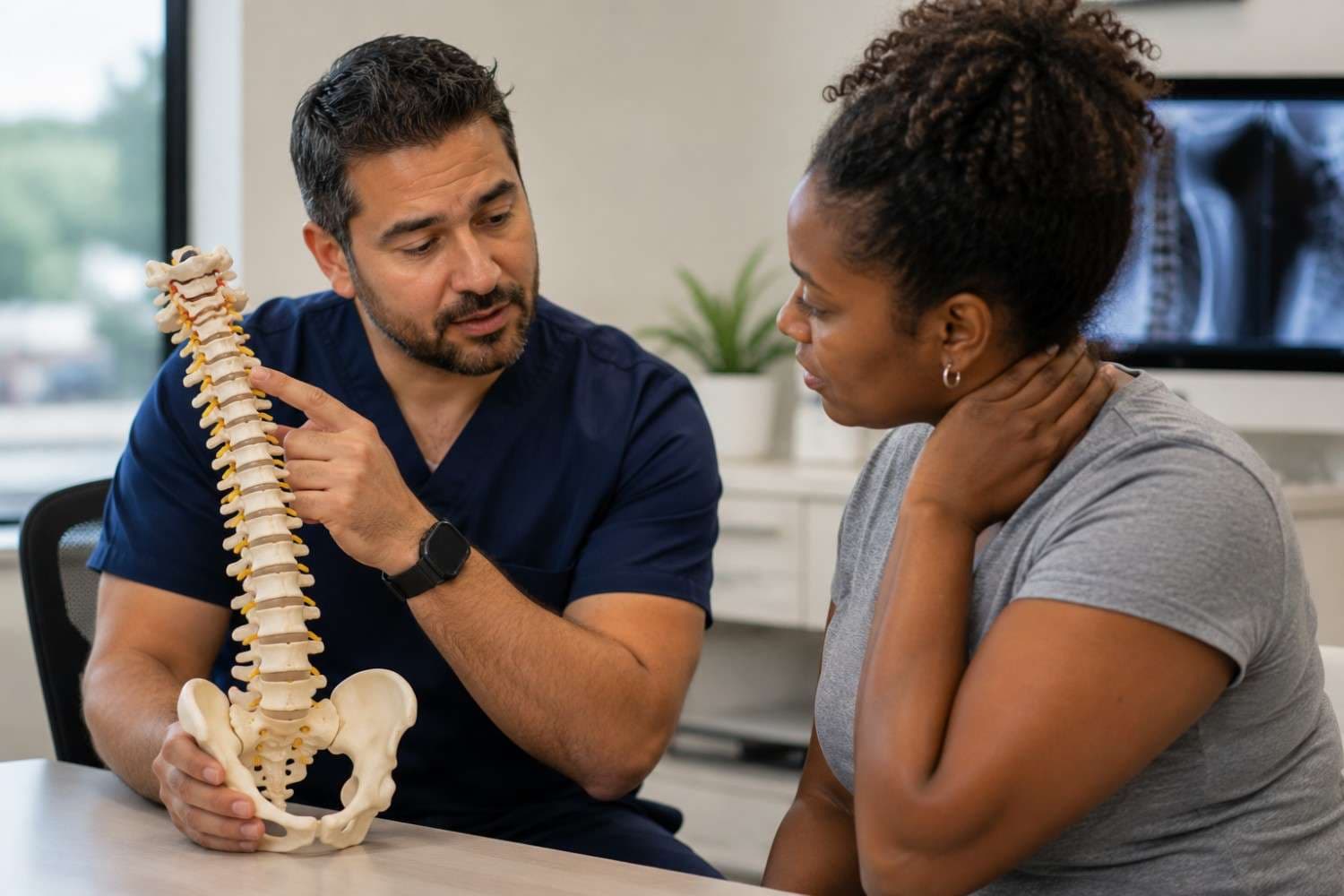
The Role of Radiologists in Interpreting Imaging Results in Beaumont, TX
DS
By Deepak Sharma, DC
Medically reviewed
Owner & Doctor of Chiropractic · 11 min read · Published · Updated · Last reviewed
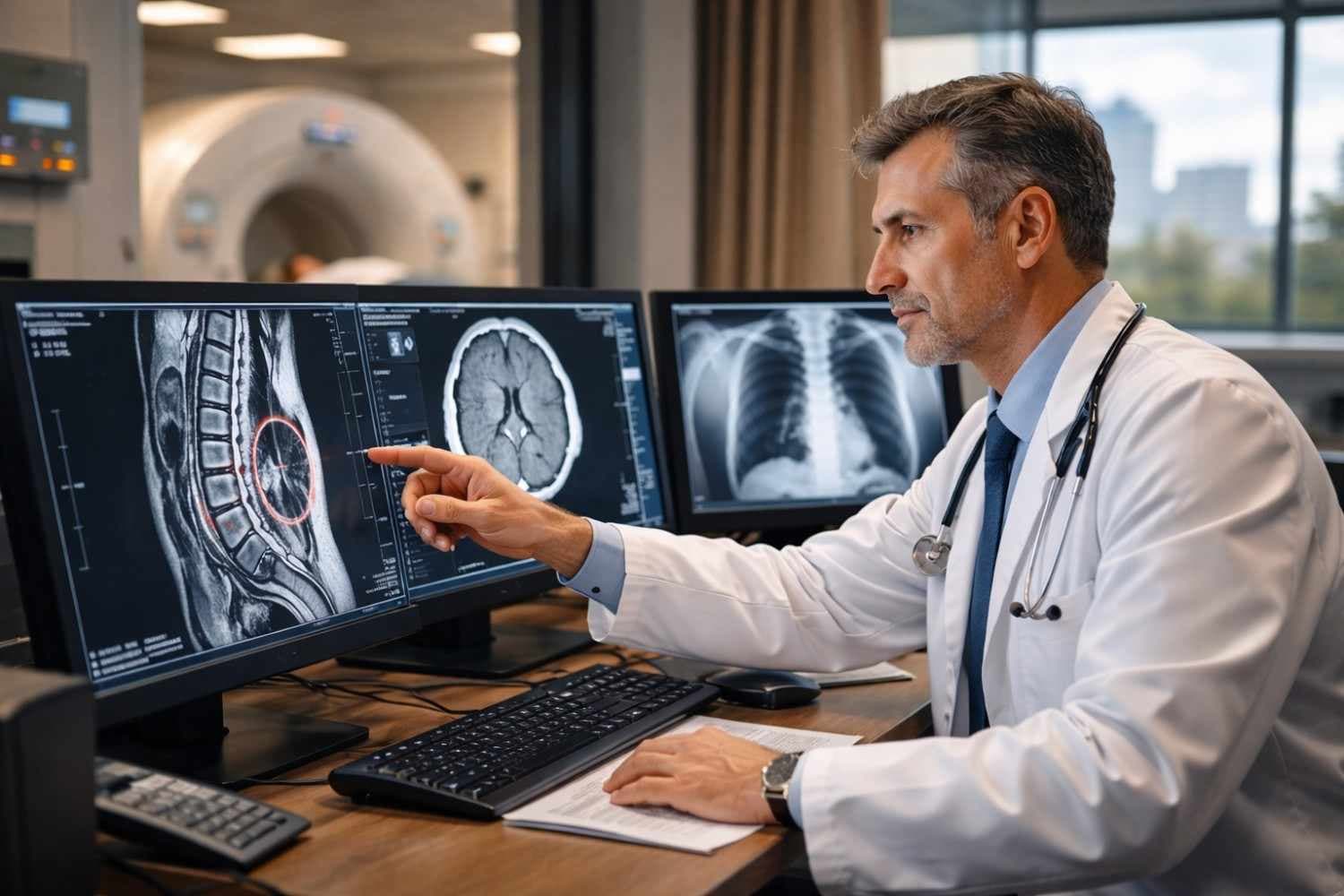
When you are injured in a car accident or suffer from persistent pain, your doctor will likely order diagnostic imaging to see what is happening beneath the surface. You might visit a hospital or an outpatient clinic in Beaumont, TX, for an X-ray, CT scan, or MRI. While a technologist guides you through the scan, they are not the ones who analyze your results.
That critical task belongs to a radiologist. But what does a radiologist do exactly? In short, they are the highly trained doctors who interpret medical images to diagnose fractures, soft-tissue injuries, and internal trauma. For accident victims, understanding the role of radiologist imaging in Beaumont TX is essential because their report often dictates your entire treatment plan.
This article explains who interprets your scans, how they do it, and why their expertise is vital for your recovery. Learn more about diagnostic imaging in Beaumont, TX.
Introduction: Who Actually Reads Your Imaging Results?
After a car wreck or a workplace injury, patients often ask, “Who reads my X-ray?” or “Who interprets the results of an MRI?” It is a common misconception that the person taking the picture (the technologist) also analyzes it. In reality, the technologist focuses on image quality and patient safety, while the interpretation is handled by a specialist physician known as a radiologist.
For general injury seekers and accident victims in Beaumont, the radiologist acts as a behind-the-scenes detective. They scrutinize every shade of gray on your scan to find the source of your pain. Whether it is a hairline fracture or a subtle disc herniation, the radiologist’s findings provide the roadmap your treating doctor uses to help you get better.
What Does a Radiologist Do, Exactly?
Many patients are unclear on the distinction between the staff members they see at an imaging center. To clarify, we need to answer the question: What is the main role of a radiologist?
Radiologists Are Specialized Medical Doctors
Radiologists are doctors who have undergone extensive education. Before they can interpret a single scan, they complete approximately 13 to 15 years of training. This includes four years of medical school, followed by a four-year radiology residency, and often an additional one to two years of fellowship training in specialized areas like neuroradiology or musculoskeletal imaging.
This rigorous path as outlined by the American College of Radiology, ensures they have the medical knowledge to distinguish between normal anatomy and pathology. In contrast, a radiologist technician (or radiologic technologist) is trained to operate the equipment and position patients but does not interpret the images or diagnose conditions.
The Core Role: Turning Images Into a Diagnosis
The primary role of the radiologist is to translate visual data into a medical diagnosis. When analyzing images from a car accident victim, they are looking for specific signs of trauma:
- Bone fractures: Identifying breaks, even those that are non-displaced or hard to see.
- Soft tissue damage: Spotting tears in ligaments, tendons, or muscles.
- Spinal injuries: Detecting disc herniations or nerve compression that could cause chronic pain.
In Beaumont, where traffic accidents are unfortunately common, having a board-certified radiologist review your scans is crucial. As noted in local injury resources, “the machinery takes the picture, but a skilled human must interpret it.” This human element is what prevents subtle injuries from being overlooked.
Where Do Radiologists Work and How Do They Support Beaumont Patients?
Where do radiologists work? While you may not always see them face-to-face, they are working in the background of almost every major medical facility.
Hospitals, Trauma Centers, and Outpatient Imaging Clinics
Radiologists are staffed in hospital emergency rooms to handle life-threatening trauma cases immediately. However, for many car accident victims in Beaumont, care takes place in outpatient imaging centers. These community-based facilities often provide a more streamlined experience for non-emergency scans like MRIs or follow-up X-rays.
Local imaging centers in Beaumont typically offer the same high-level expertise—often employing board-certified radiologists—but with greater scheduling flexibility than a busy hospital.

Why Radiologist Expertise Matters for Cost and Quality
The cost of medical imaging includes the technical fee (for the machine) and the professional fee (for the radiologist’s interpretation). This is important because MRI machines can cost over $1 million, and maintaining them requires significant investment. However, costs vary significantly by location.
Nationally, the average cost of an MRI is around $1,325. In Texas, independent outpatient facilities may charge significantly less—sometimes around $500—while hospital MRIs can range from $1,500 to $1,700. Despite the lower cost at independent centers, the quality of the reading remains high because it is performed by qualified radiologists. For more Understanding the cost of medical imaging in Beaumont, TX.
How Do Radiologists Interpret Images? (X‑ray, CT, MRI)
One of the most frequent questions we hear is, “How do radiologists interpret images?” and “Can radiologists interpret scans?” The answer is yes—interpreting scans is their primary function. They use high-resolution monitors and specialized software to view images in great detail.

A Step‑by‑Step Look at Interpretation
The interpretation process is systematic:
- Clinical Review: The radiologist reviews your medical history and the reason for the exam (e.g., “neck pain after rear-end collision”).
- Image Analysis: They scan through the images. For CT and MRI, this involves looking at hundreds of “slices” of the body to build a 3D mental picture.
- Comparison: If you have had previous scans, they compare them to see if an injury is new or pre-existing.
- Reporting: They dictate a formal report detailing their findings.
Interpreting X‑rays: Quick Look at Bones and Joints
X-rays are often the first step in injury care. Radiologists check for alignment issues, dislocations, and fractures. While X-rays are excellent for bone, they are limited in showing soft tissues. If a radiologist suspects a ligament tear that the X-ray can’t show, they will recommend further imaging.
Interpreting CT Scans: Rapid Detail for Trauma
Computed Tomography (CT) scans provide a detailed cross-sectional view. They are critical in trauma because they are fast. In Beaumont area hospitals, routine CT reports are often available to doctors within 24–48 hours, but emergency reads can be completed in as little as 30–60 minutes to rule out internal bleeding or complex fractures.
Interpreting MRI Results: Soft‑Tissue and Spinal Injury Focus
Who interprets the results of an MRI? This task requires a radiologist with specific training in MRI physics and anatomy. MRI is the gold standard for soft tissue. After a car accident, a radiologist uses MRI to identify disc herniations, nerve impingements, and edema (swelling) in the bone marrow—injuries that are invisible on standard X-rays.
Who Interprets Ultrasound Results and Other Imaging Tests?
While X-rays and MRIs are common, accident victims sometimes require ultrasounds to check for organ damage or blood clots.
Who Interprets Ultrasound Results?
Can a radiologist read an ultrasound? Yes. While a sonographer (technologist) holds the probe and captures the images, the radiologist analyzes the real-time video clips and static images to make a diagnosis. They look for abnormalities in blood flow, organ structure, or fluid accumulation.
Other Tests Radiologists Commonly Interpret
Beyond injury care, radiologists interpret mammograms, nuclear medicine scans, and fluoroscopy studies. However, for accident victims in Beaumont, the focus remains largely on X-ray, CT, and MRI to ensure all traumatic injuries are documented.
How Radiologist Reports Help Your Doctor Plan Treatment
The radiologist does not typically treat you directly; instead, they act as a consultant to your treating physician.
From Scan to Report to Treatment Plan
Once the radiologist interprets your images, they send a report to your doctor—usually within 24 to 48 hours for routine cases. Your doctor combines this report with your physical exam to confirm a diagnosis. For example, if you have back pain, the radiologist’s confirmation of a disc herniation helps your doctor decide between physical therapy, pain management, or a surgical referral. See our guide on How long imaging results take.
Why Accurate Imaging Interpretation Is Crucial After an Accident
Missed diagnoses can be devastating. A hairline fracture left untreated can lead to chronic arthritis, and an undiagnosed disc issue can result in permanent nerve damage. Experienced radiologists in Beaumont play a vital role in risk management, ensuring that “hidden” injuries are caught early. Schedule an MD consultation in Beaumont, TX.
Understanding and Using Your Imaging Report
One of the most empowering things you can do as a patient is to understand your imaging report.

Key Sections of a Radiology Report
When you receive your copy, you will typically see:
- Clinical History: Why the scan was done.
- Technique: How the scan was performed.
- Findings: A detailed, technical description of each body part scanned.
- Impression: The summary. This is the most important part for patients, as it lists the radiologist’s final diagnosis.
Questions to Ask Your Doctor About the Radiologist’s Findings
Don’t be afraid to ask your doctor to translate the medical jargon. Good questions include:
- “What did the radiologist find on my MRI?”
- “Does the report explain the specific pain I’m feeling?”
- “Did the radiologist recommend any follow-up scans?”
Radiologists, Compensation, and Why Their Expertise Is in Demand
You might wonder why radiology is such a specialized field. The demand for accurate diagnostics is higher than ever. Radiologist salary data reflects this high level of responsibility. A 2025 analysis reported that full-time diagnostic radiologists in the U.S. earned an average of about $571,749 in the 2024 work year. This represents a 7.5% increase in just one year.
Why does this matter to you as a patient? It highlights that the healthcare system places immense value on precise image interpretation. When you get a scan, you are paying for the expertise of a highly compensated specialist whose sole job is to ensure your diagnosis is correct.
Conclusion: Partnering With Your Radiologist to Understand Your Imaging Report
While you may never meet them, the radiologist is a key player in your recovery team. By accurately interpreting your X-rays, CTs, and MRIs, they provide the answers your doctor needs to treat your injuries effectively.
Whether you are recovering from a car accident or investigating chronic pain, remember:
- Radiologists are doctors with over a decade of training.
- Their reports are the foundation of your treatment plan.
- Timely and accurate interpretation prevents long-term complications.
If you have recently been injured, do not leave your diagnosis to guesswork.
Ready to take the next step in your recovery? Understand your imaging report by scheduling a consultation with our Beaumont team today. We can review your results and help you get on the path to healing.
Medically reviewed by
Verified
DS
Deepak Sharma
DC
Owner & Doctor of Chiropractic
Deepak Sharma, DC is a licensed Doctor of Chiropractic and the owner of Car Accident Cares in Beaumont, TX. He reviews the clinical content published across the site and works with a multidisciplinary network of MDs, chiropractors, imaging centers, and pain-management specialists focused on accurate diagnosis, evidence-based treatment, and complete recovery for motor-vehicle-accident victims across Beaumont and Houston.