The Benefits of CT Scans for Diagnosing Injuries: A Beaumont Patient’s Guide
DS
By Deepak Sharma, DC
Medically reviewed
Owner & Doctor of Chiropractic · 5 min read · Published · Updated · Last reviewed
Introduction
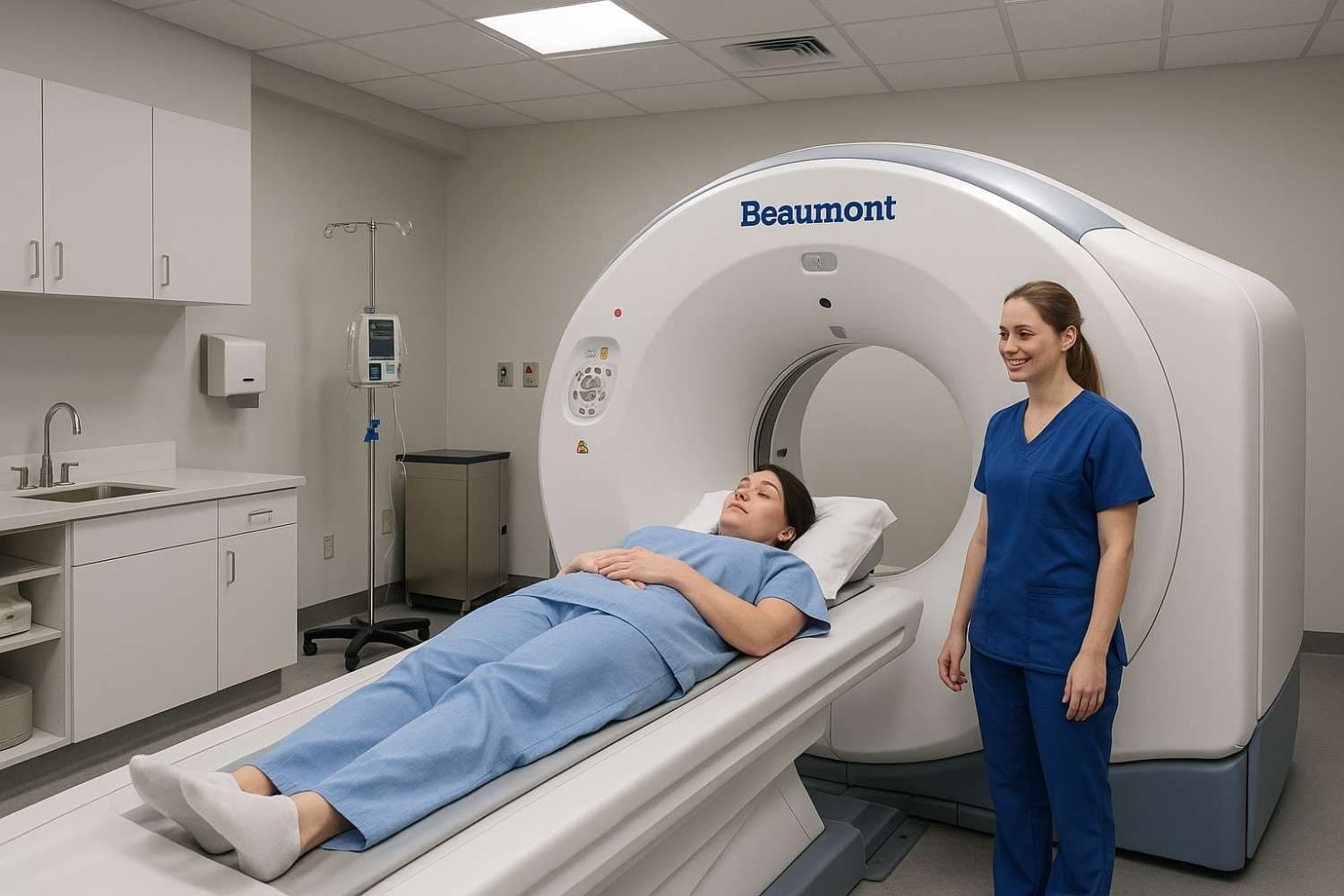
In Beaumont, TX, timely and precise diagnosis after trauma is essential. In 2024, Texas recorded 4,150 traffic fatalities and over 251,977 injury-related emergency department visits statewide. When sudden accidents—like motor vehicle collisions or serious falls—occur, a standard X-ray may miss complex fractures or internal injuries. A CT scan Beaumont TX offers rapid, detailed imaging that can be life-saving. This guide explains what a CT scan is, how it works, and which injuries it diagnoses best, ensuring Beaumont patients receive optimal care.
What Is a CT Scan? Technology Explained
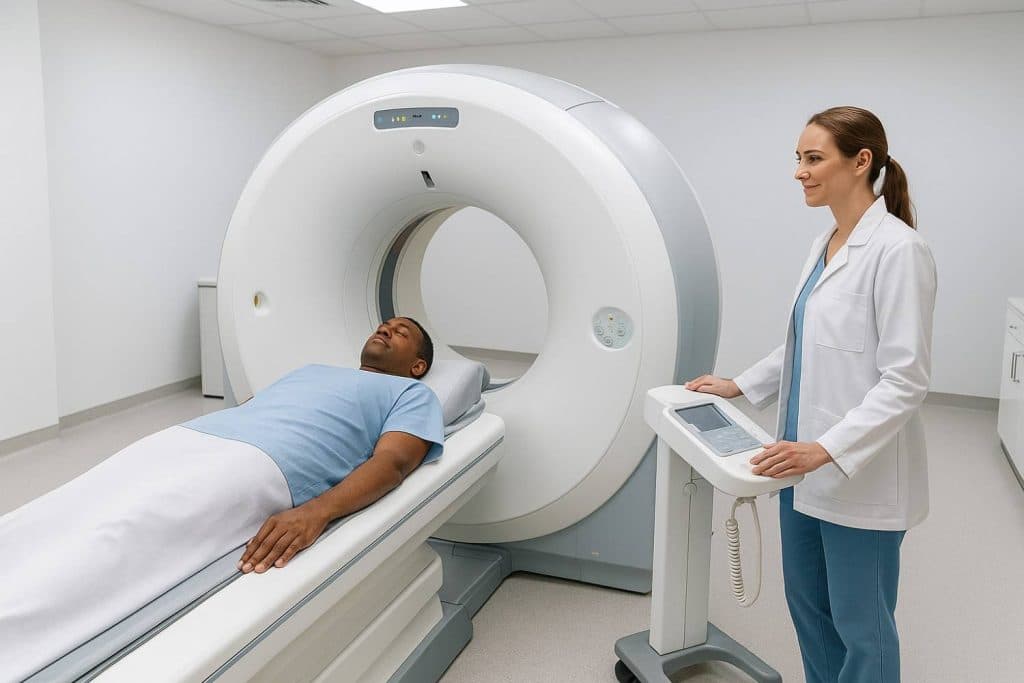
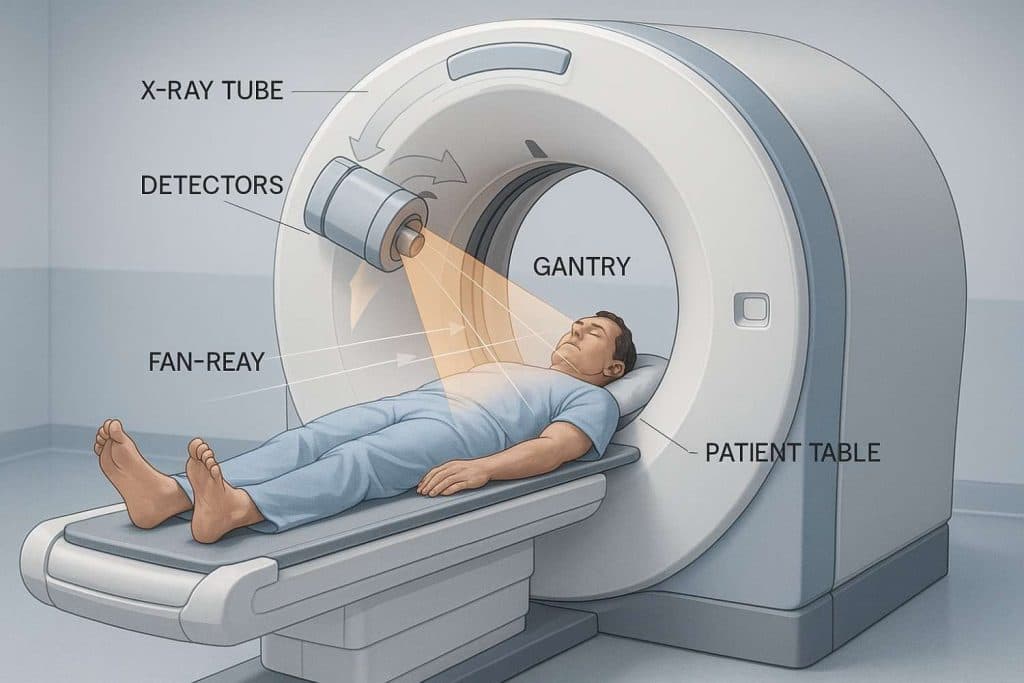
A CT (Computed Tomography) scan combines hundreds of X-ray images taken from various angles around the body. A computer reconstructs these into cross-sectional “slices,” creating a 3D map of bones, blood vessels, and soft tissues. Originating in the early 1970s, CT technology uses a rotating X-ray tube and detectors within a circular gantry to collect fan-shaped beams. These slices can be rendered into detailed 3D models, offering clarity far beyond flat two-dimensional X-rays. Learn more about our advanced Beaumont CT services.
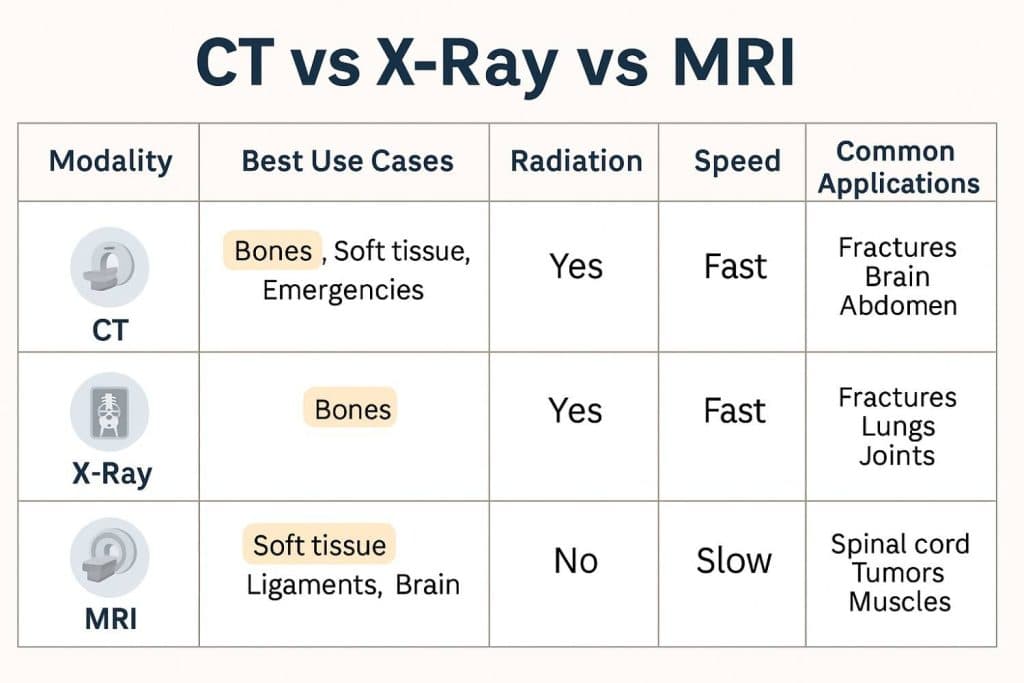
CT vs. Other Imaging Modalities
While various diagnostic imaging tools exist, CT scans offer unique benefits, especially in specific injury scenarios.
CT vs. X-ray: Depth and Detail
- X-ray: Quick, inexpensive, excellent for straightforward fractures, but overlapping structures can obscure hairline or comminuted breaks.
- CT scan: 3D cross-sections reveal subtle hairline fractures, complex comminuted fractures, and the relationship between bones and adjacent soft tissues.
CT vs. MRI: Speed and Accessibility
- CT scan: Completes in seconds; ideal for emergencies. Compatible with metal implants e.g., pacemakers. Uses ionizing radiation.
- MRI: Superior for soft tissue and neurologic detail; scan time 30–60 minutes; contraindicated with certain implants; no radiation.
Key Injuries Diagnosed with CT Scans
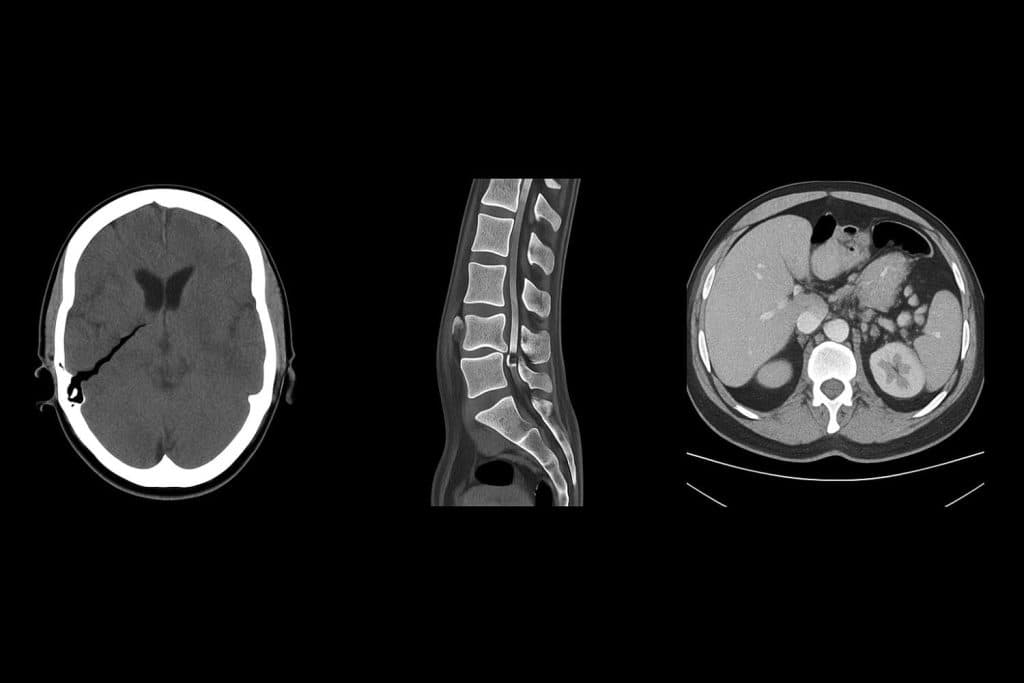
1. Complex Bone Fractures
- Hairline Fractures: Often invisible on X-ray but clear on CT.
- Comminuted Fractures: Bones shattered into multiple pieces, requiring precise mapping for surgical planning.
- Spinal Compression Fractures: CT identifies vertebral collapse after falls or high-impact trauma.
- Joint Injuries: Evaluates complex intra-articular fractures of the wrist, ankle, and other joints.
2. Internal Organ Damage
- Solid Organ Trauma: Detects lacerations or hematomas in the liver, spleen, and kidneys.
- Internal Bleeding: CT with intravenous contrast pinpoints active hemorrhage in the abdomen or chest.
- Vascular Injuries: Contrast-enhanced CT angiograms visualize vessel tears, dissections, or blockages.
3. Traumatic Brain Injuries
- Intracranial Hemorrhages: Rapid detection of epidural, subdural, or intracerebral bleeding.
- Brain Swelling: Measures midline shifts and swelling that risk herniation.
- Skull Fractures: Pinpoints hairline or depressed fractures of the cranial vault.
Advantages of CT Scanning for Injury Assessment
- Speed: Full-body trauma CT protocols complete in under one minute—critical when every second counts.
- Detailed 3D Images: Enables 3D reconstructions for surgical planning and patient education.
- Non-invasive: Except for IV contrast administration, the scan itself is painless.
- Contrast Versatility: Highlights blood vessels, organs, and pathology with high sensitivity.
- Surgical Planning: Precise anatomical maps guide surgeons in complex trauma repairs.
Globally, CT imaging is integral in emergency departments, reducing mortality by enabling rapid, accurate diagnoses. For more on our comprehensive imaging capabilities, visit our Beaumont imaging center.
When to Consider a CT Scan in Beaumont
A CT scan is indicated when detailed, rapid imaging is needed:
- Post-Vehicle Accidents: Head, chest, abdominal, or spinal trauma requires immediate CT scanning.
- High-Impact Falls: Suspected internal injuries or complex fractures after falls from height.
- Suspected Internal Bleeding: Signs of hypotension, abdominal pain, or unexplained shock.
- Pre-Surgical Planning: Neurosurgery, orthopedic trauma, or vascular procedures benefit from precise 3D models.
These guidelines align with advanced trauma life support (ATLS) protocols and ensure comprehensive care for Beaumont patients.
Conclusion
For Beaumont residents facing the aftermath of serious injury, a CT scan Beaumont TX is an indispensable diagnostic tool. Its combination of speed, precision, and versatility makes it superior for mapping complex fractures, detecting internal bleeding, and assessing traumatic brain injuries. While standard X-rays and MRI each have their roles, CT scanning remains the gold standard in emergency and acute trauma settings.
Our facility is proud to offer state-of-the-art CT imaging, staffed by experienced technologists and radiologists dedicated to your rapid, accurate diagnosis and optimal recovery. Don’t leave your care to chance—learn more about our CT scan services and schedule your assessment today. Contact us to ensure you receive the clarity and speed you need on your path to healing.
Medically reviewed by
Verified
DS
Deepak Sharma
DC
Owner & Doctor of Chiropractic
Deepak Sharma, DC is a licensed Doctor of Chiropractic and the owner of Car Accident Cares in Beaumont, TX. He reviews the clinical content published across the site and works with a multidisciplinary network of MDs, chiropractors, imaging centers, and pain-management specialists focused on accurate diagnosis, evidence-based treatment, and complete recovery for motor-vehicle-accident victims across Beaumont and Houston.